
or ‘blog post’.
Functional Fitness at Home: Daily Strength, Energy & Mobility Workouts Without a Gym
Did you know that a staggering 60% of adults don't get the recommended amount of physical activity each week? This alarming statistic highlights a critical need for accessible and effective fitness solutions. Forget expensive gym memberships and complicated equipment! This blog post will guide you through a powerful Functional fitness routine right in the comfort of your own home. We'll show you how to build strength, boost energy, and improve mobility with simple, bodyweight exercises. Let's ditch the excuses and unlock your potential for a healthier, more active life! We will explore a detailed fitness exercise that improves your overall physical state.
Why This Workout Matters
Functional fitness focuses on exercises that mimic everyday movements. Think about squatting to pick up groceries, twisting to reach something on a shelf, or pushing open a heavy door. By training these movements, you're not just building muscle; you're improving your overall quality of life. According to the American Council on Exercise (ACE), functional fitness can enhance balance, coordination, and reduce the risk of injuries. Furthermore, Home fitness plan for strength and mobility routines are particularly beneficial for busy individuals who may find it challenging to commit to regular gym sessions. Functional training uses multiple muscles at the same time, and this activity is called compound training. This type of activity ensures calorie burn and fitness in a short amount of time.
List of Exercises
This workout is designed to be completed in approximately 30-40 minutes and can be adjusted based on your individual fitness level. Remember to consult your doctor before starting any new exercise program.
1. Bodyweight Squats
- Description: Stand with your feet shoulder-width apart, chest up, and core engaged. Lower your hips as if sitting into a chair, keeping your back straight. Return to the starting position and repeat.
- Muscle Groups Targeted: Quadriceps, hamstrings, glutes.
- Modifications: For beginners, perform box squats by squatting down to a chair or bench. For a more challenging workout, try jump squats or adding resistance with dumbbells held at your sides.
2. Push-Ups
- Description: Start in a plank position with your hands shoulder-width apart. Lower your body until your chest nearly touches the ground, keeping your core engaged and your body in a straight line. Push back up to the starting position.
- Muscle Groups Targeted: Chest, shoulders, triceps.
- Modifications: If traditional push-ups are too challenging, perform them on your knees. You can also modify the incline by performing push-ups against a wall or elevated surface. For a more difficult workout, try decline push-ups with your feet elevated on a bench.
3. Walking Lunges
- Description: Stand with your feet together. Step forward with one leg and lower your body until both knees are bent at a 90-degree angle. Push off with your front foot to return to the starting position and repeat with the other leg.
- Muscle Groups Targeted: Quadriceps, hamstrings, glutes, calves.
- Modifications: For beginners, you can hold onto a chair or wall for balance. For a more intense workout, add dumbbells or a barbell. You can also try reverse lunges or lateral lunges.
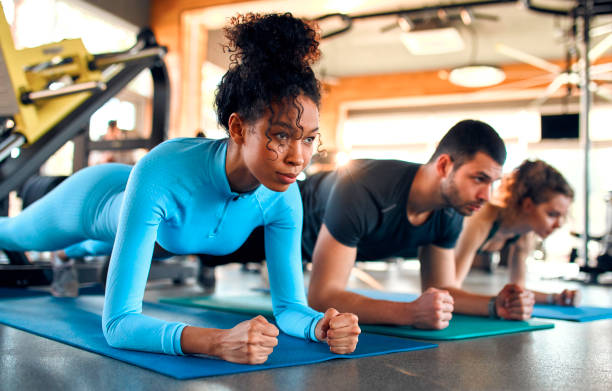
4. Plank
- Description: Start in a plank position with your forearms on the ground and your body in a straight line from head to heels. Engage your core and hold the position for as long as possible, maintaining proper form.
- Muscle Groups Targeted: Core (abdominals, obliques, lower back).
- Modifications: If a full plank is too challenging, try a modified plank on your knees. You can also perform side planks or add variations like plank jacks or alternating arm/leg lifts.
5. Bird Dog
- Description: Start on your hands and knees, ensuring your back is flat. Extend one arm forward and the opposite leg backward, keeping your core engaged and your body stable. Return to the starting position and repeat on the other side.
- Muscle Groups Targeted: Core, glutes, lower back.
- Modifications: To make it easier concentrate on getting the form right. Focus on balancing the position before adding any movements. To make it harder try holding the position for longer. You can also use ankle weights. Be careful to not put too much strain on your lower back.
Common Mistakes to Avoid
- Poor Form: Using improper form can lead to injuries and reduce the effectiveness of the exercises. Focus on maintaining proper posture and control throughout each movement. Watch videos and practice in front of a mirror to improve your form.
- Skipping Warm-Up: Failing to warm up your muscles before exercising can increase the risk of injury. Always start with a dynamic warm-up that includes light cardio and stretching. (More on warm-ups later in the article)
- Overtraining: Pushing yourself too hard, too soon can lead to burnout and injuries. Start slowly and gradually increase the intensity and duration of your workouts. Rest is just as important training.
- Neglecting Core Engagement: Your core muscles are essential for stability and power. Engage your core throughout each exercise to protect your spine and improve your overall performance.
- Holding Your Breath: Holding your breath during exercise can increase blood pressure and lead to dizziness. Remember to breathe deeply and consistently throughout each movement. Exhale during the exertion phase of a rep and release during the resting phase.
Tips for Success
- Warm-Up: Begin each workout with 5-10 minutes of dynamic stretching and light cardio, such as jumping jacks, arm circles, and leg swings. Do some static stretch to finish. This will prepare your muscles for exercise and reduce the risk of injury.
- Cool-Down: End each workout with 5-10 minutes of static stretching, holding each stretch for 20-30 seconds. This will help improve flexibility and reduce muscle soreness.
- Proper Posture: Focus on maintaining proper posture throughout each exercise, keeping your back straight, core engaged, and shoulders relaxed.
- Listen to Your Body: If you experience any pain during exercise, stop immediately and consult a healthcare professional.
- Stay Hydrated: Drink plenty of water before, during, and after your workouts to stay hydrated and prevent muscle cramps.
- Consistency is Key: Aim to perform this Functional fitness routine 2-3 times per week for optimal results. Make it a habit and integrate this program into your Home fitness plan for strength and mobility.
Healthy Lifestyle Integration
These exercises can be easily integrated into your weekly routine. Consider performing them in the morning before work, during your lunch break, or in the evening after dinner. Combine these exercises with other healthy habits, such as eating a balanced diet, getting enough sleep, and managing stress. Functional fitness is especially useful for those looking for flexibility, stress relief, and weight management.
Conclusion
By incorporating this Functional fitness routine into your Home fitness plan for strength and mobility, you'll be well on your way to building strength, boosting energy, and improving mobility. Start today and experience the transformative benefits of functional fitness! Share this post with your friends and family and encourage them to join you on your fitness journey. Explore our other workout videos and health resources for more tips and inspiration!
FAQs
- Do I need equipment for this workout? No, this workout is designed to be performed using only your body weight. However, you can add resistance with dumbbells or resistance bands for a more challenging workout.
- How often should I do these exercises? Aim to perform this workout 2-3 times per week, with rest days in between sessions. You can adjust the frequency based on your individual fitness level and goals.
- How long should I hold each plank? Start with 30 seconds and gradually increase the duration as you get stronger.
- Can I do this workout if I have joint pain? If you have joint pain, consult a healthcare professional before starting this or any other exercise program. They can help you modify the exercises to avoid putting stress on your joints.
- Is this workout suitable for beginners? Yes, this workout is suitable for beginners, as each exercise includes modifications to make it easier or more challenging. Start with the beginner modifications and gradually progress to more advanced variations as you get stronger.

Comments
Post a Comment